

Repiping is one of the bigger plumbing jobs a homeowner will ever approve, so it helps to understand the cost to repipe a house before the quotes start coming in. For most US homes in 2026, a full repipe is a planning estimate of roughly $4,000 to $15,000 or more, depending on the size of the house, the number of bathrooms, and whether you choose PEX or copper. This guide breaks down the typical ranges, the warning signs that your pipes are at the end of their life, what the work involves, and how to keep the final bill under control.
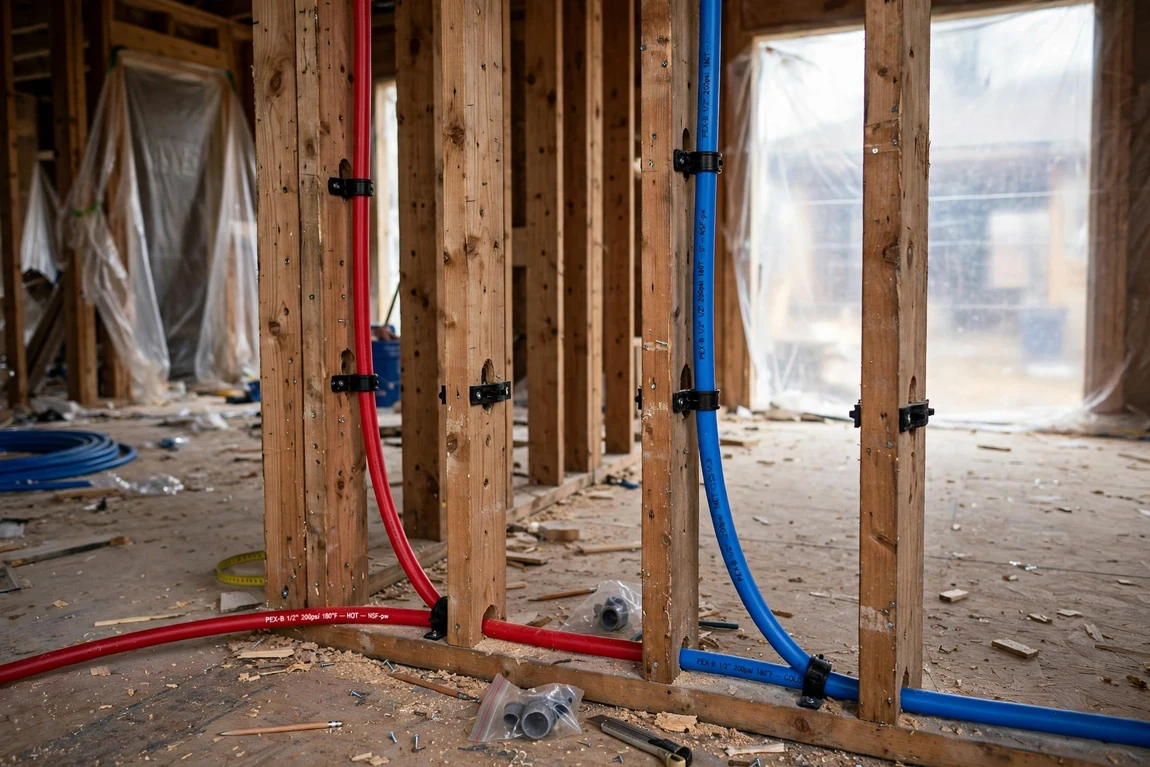
New PEX supply lines run through open wall framing during a whole-house repipe. (Illustrative image)
Signs Your House Needs Repiping
Pipes rarely fail all at once. They decline slowly, and the clues usually show up in your water long before a pipe bursts. Watch for these warning signs:
- Pipe age: galvanized steel lines were built to last a few decades, not forever. Original galvanized or cast iron pipes aged 40 to 50 years or more are living on borrowed time.
- Low water pressure that keeps getting worse across the whole house, rather than at one fixture, as rust and scale narrow the inside of old pipes.
- Discoloured water: yellow, brown, or rusty water first thing in the morning points to corrosion inside the pipes.
- Frequent pinhole leaks, or repeated repairs on different sections of pipe in a short period.
- Noisy pipes, metallic-tasting water, or visible rust on exposed pipework in the basement or crawl space.
Some symptoms overlap with other faults, so rule out simpler causes first using our guide to common plumbing problems.
What the Job Involves and How Long It Takes
A full repipe replaces the hot and cold supply lines throughout the house, from where water enters the home to every tap, shower, toilet, and appliance. The crew shuts off the water, drains the system, opens small sections of wall, ceiling, or floor, and runs the new pipework. Old pipes are usually capped and left in place where removal would cause unnecessary damage, or removed where access is easy.
Most single-family homes take about two to five days, depending on size and access. Water is normally turned back on at the end of each day, so you can usually stay in the house. Wall patching may be included or handled separately, so ask before work starts. Permits and an inspection are required in many areas, and a reputable plumber will arrange them.
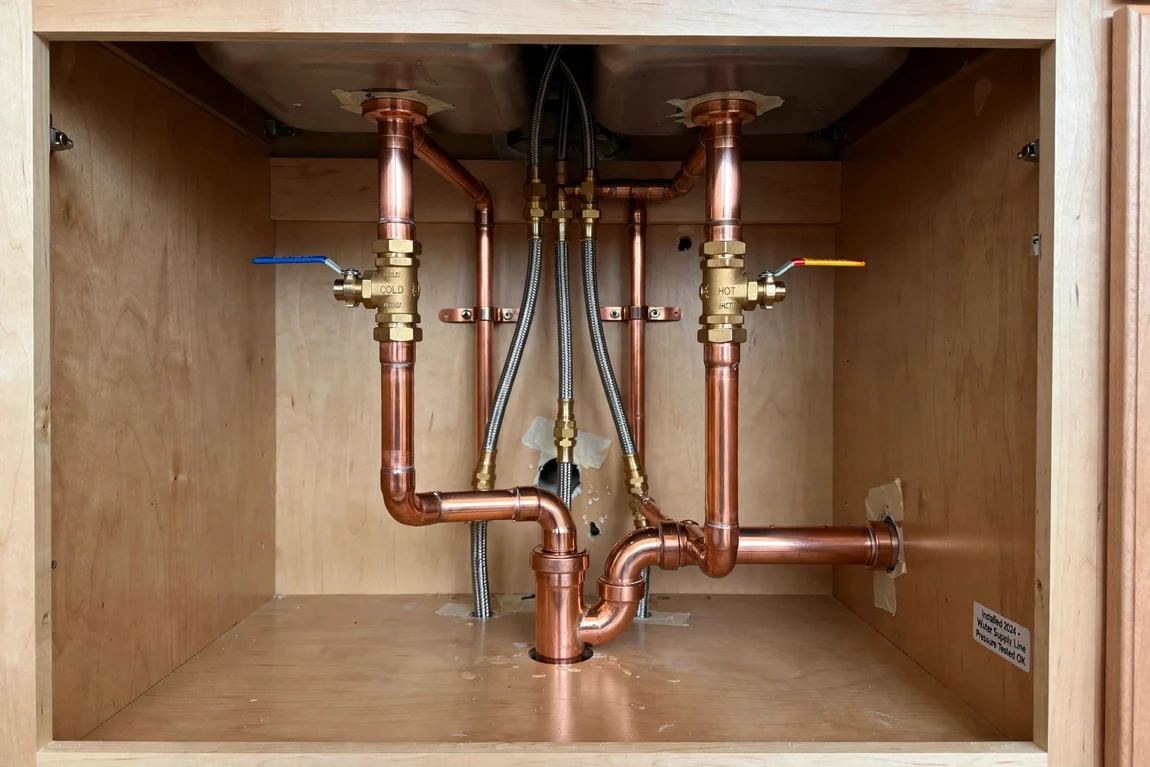
Fresh copper pipework and new shutoff valves under a kitchen sink, ready for the fixtures to be reconnected. (Illustrative image)
What Affects the cost to repipe a house?
No two quotes are alike, because the price is driven by how much pipe has to be run and how hard it is to reach. The ranges below are typical US planning estimates for 2026, not fixed prices. Your actual quote will depend on your region, your home, and the plumber you hire.
| Home size / bathrooms | PEX repipe (typical range) | Copper repipe (typical range) |
| Small home, 1 bathroom (under 1,000 sq ft) | $4,000–$6,500 | $6,000–$9,000 |
| Average home, 2 bathrooms (1,000–1,500 sq ft) | $5,500–$9,000 | $8,500–$13,000 |
| Larger home, 3 bathrooms (1,500–2,500 sq ft) | $8,000–$12,000 | $12,000–$18,000 |
| Large or two-storey home, 4+ bathrooms | $11,000–$16,000+ | $16,000–$25,000+ |
| Partial repipe (one bathroom or one section) | $1,500–$4,500 | $2,500–$6,000 |
Many plumbers also price per fixture, often around $350 to $550 per fixture for PEX and more for copper, which lets you cross-check a quote by counting your fixtures.
PEX vs Copper: Which Should You Choose?
PEX is flexible plastic tubing, usually red for hot and blue for cold. It is quicker to install because it bends around corners and needs fewer fittings, which is why it is normally the cheaper option. It also resists scale buildup and handles cold conditions better than rigid pipe, although no pipe is freeze-proof. Most whole-house repipes today are done in PEX.
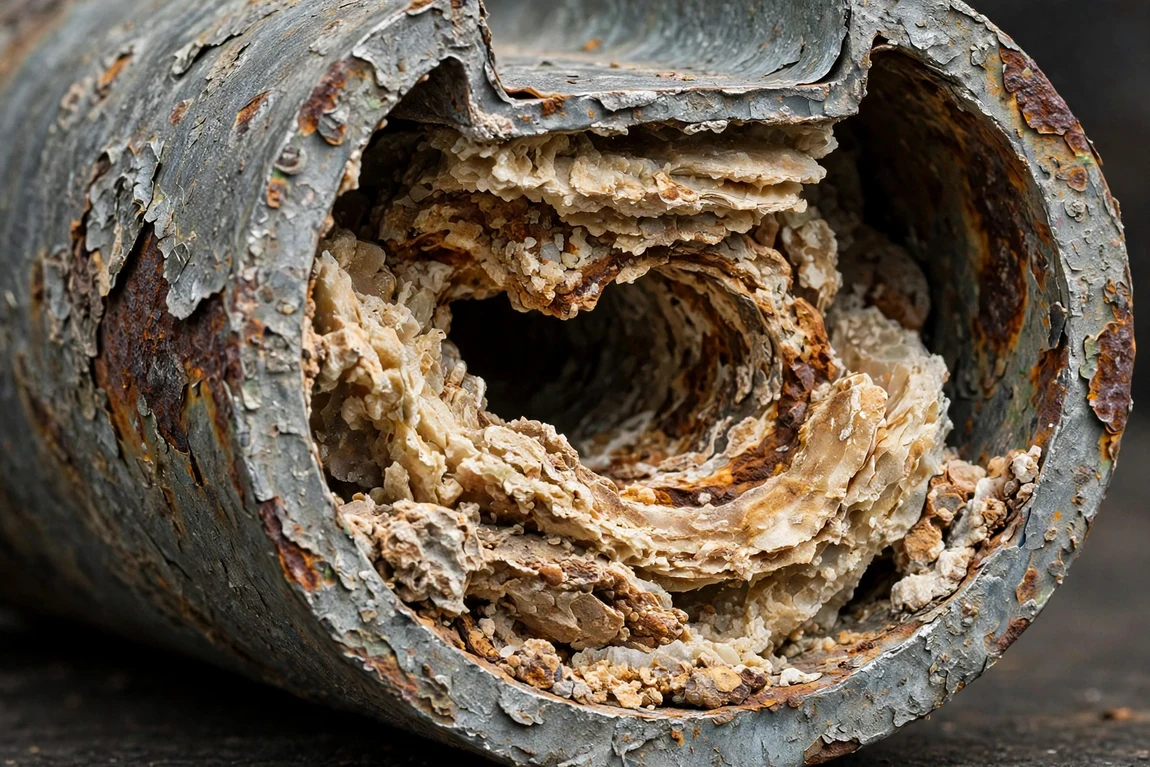
Inside an old galvanized pipe: rust and scale can choke off most of the original opening. (Illustrative image)
Copper is the traditional choice: rigid, durable, and preferred by some homeowners and local codes. The trade-off is price, because the material costs more, every change of direction needs a soldered fitting, and installation takes longer. PEX offers better value for most repipes; copper suits matching existing pipework or a local requirement.
Hard water shortens the life of any pipework. If scale is a problem in your area, treating the water helps new pipes last longer, so see our whole house water filtration guide and consider fitting a system while the pipework is open.
Factors That Change the Price
- Access: pipes in an open basement or crawl space cost less than pipes buried in a concrete slab or behind tiled walls.
- Storeys and layout: a two-storey home with bathrooms at opposite ends needs longer runs and more wall openings than a compact single-storey home.
- Wall and floor repairs: patching drywall is modest, but repairing tile, plaster, or hardwood adds up.
- Permits and inspections: fees vary by city and county, and are normally a small part of the total.
- Extras found along the way: a worn main shutoff valve or pressure regulator. Note that repiping covers supply lines, not drains; for slow drains, see our drain cleaning cost guide instead.
- Regional labour rates: labour in large metro areas typically costs more than in smaller towns.
Partial vs Full Repipe
A partial repipe replaces only the worst section, such as the lines serving one bathroom. It costs less upfront and can make sense if the rest of the system is newer and sound. The risk is that the remaining old sections keep failing, and you pay for repeat visits and repeat wall repairs.
A full repipe costs more in one go, but it resets the clock on the whole system, usually carries a longer workmanship warranty, and is often better value when the whole house still has galvanized or corroded pipe. Combining other work while walls are open can also save labour; our tankless water heater cost guide shows what that upgrade typically runs.
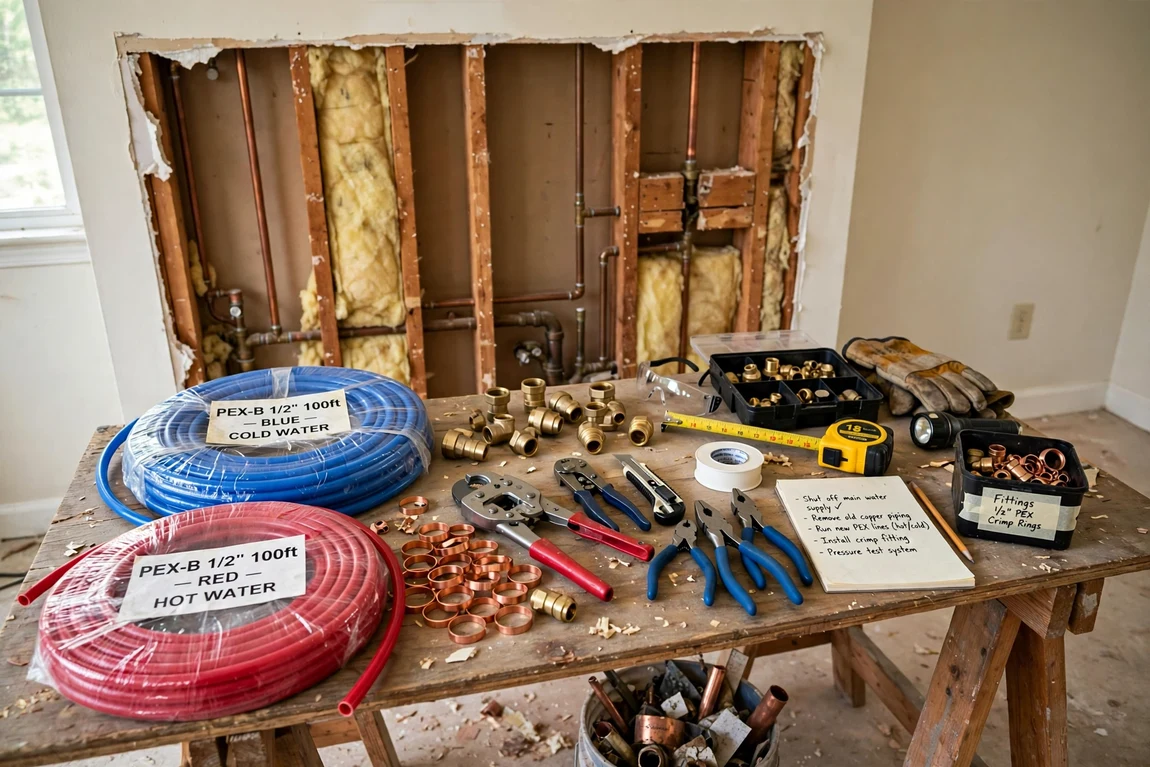
Pipe, fittings, and tools staged before a repipe begins, so the water is off for as short a time as possible. (Illustrative image)
How to Save on a Repipe
- Get at least three written quotes with the same scope, the same material, and the same number of fixtures, so you are comparing like with like.
- Choose PEX where your code allows it. The labour saving is usually the single biggest reduction available.
- Clear access before the crew arrives. Moving furniture and stored items away from walls and access panels keeps paid hours focused on plumbing.
- Combine work while walls are open, such as adding shutoff valves, rather than paying to open the same wall twice.
- Ask what is not included. Wall patching, painting, and permit fees are common exclusions that change the true total.
Hiring Tips
Use a licensed, insured plumber or a specialist repipe company, and check the licence is current in your state. Specialists who do this work every week are usually faster and neater, so ask how many repipes the crew completes in a typical month. Get the scope in writing: pipe material and brand, number of fixtures, whether wall patching is included, permit handling, and the warranty on materials and labour. Avoid quotes given over the phone without a visit, and be cautious of a price far below the others, which often means patching, permits, or fixtures were quietly left out.
Repiping is disruptive for a few days, but it ends the cycle of leaks, rusty water, and falling pressure for decades. Confirm the diagnosis, compare like-for-like quotes, and treat the ranges here as a planning starting point rather than a promise.