

Thumps in the attic at night, a tipped trash can at dawn, and a torn soffit are classic raccoon clues. These strong, clever animals treat attics and chimneys like hollow trees. Learning how to get rid of raccoons safely means getting the animal out first, checking for young, and only then sealing the house — never the other way around.
This guide covers identification, humane exclusion, food and habitat fixes, and the legal limits on trapping and relocation. Never handle a raccoon, keep pets away, and call animal control or a licensed professional if a raccoon is in your living space.
Signs You Have a Raccoon Problem
An adult raccoon is a stocky mammal about 2 to 3 feet long and weighing 7 to 30 pounds, according to the University of California Statewide IPM Program. It has a distinctive black mask over the eyes and a heavily furred tail with alternating light and dark rings.
Noises are often the first sign: thumping, scratching, or chattering on the roof, in the chimney, or in the attic, especially at night. Outdoors, look for tipped garbage cans, rolled-back turf, raided bird feeders, and five-toed tracks near water, trash, or entry points.
WildlifeHelp.org adds a useful access clue: raccoons need only a 4-inch gap to enter a space. Check where different building materials join, around attic vents, and at loose fascia or shingles. If you also have droppings or nesting in walls, compare our guides on rodent control and getting rid of mice in the house so you do not confuse a smaller pest with a raccoon.
Why Raccoons Come to Your Home
Raccoons come for food, water, and a safe den. In towns and suburbs they scavenge garbage cans and compost piles, eat fallen fruit and nuts, raid gardens and bird feeders, and rank pet food left outside overnight high as a food source, according to UC IPM.
How to Get Rid of Raccoons Step by Step
The humane order for how to get rid of raccoons is inspect, remove food, encourage or exclude the animals out, confirm the space is empty, and then repair. Sealing first can trap animals inside, where they can die, cause severe odor, or tear a new way out.
Step 1: Inspect without entering the den. From outside and, if safe, from an attic hatch, map every entry point. Look and listen for young before any exclusion. If you hear chattering or crying, or it is spring or early summer, assume babies may be present and slow down.
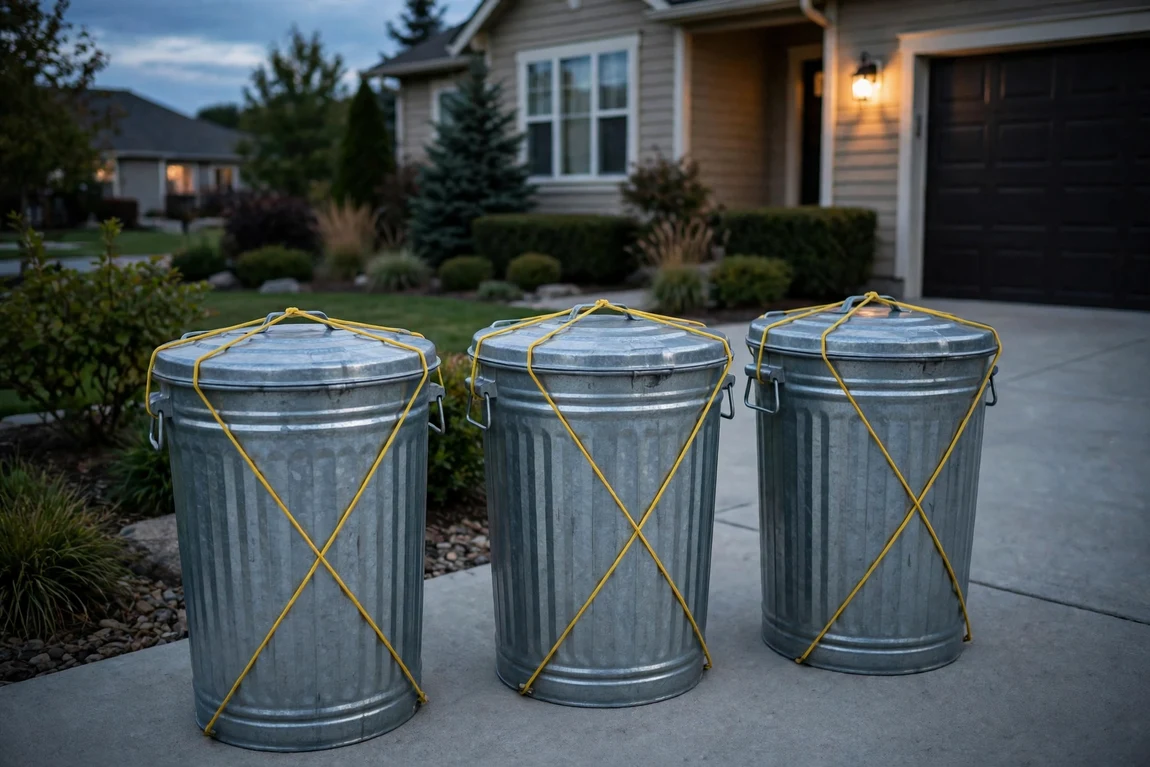
Step 2: Remove food the same day. Use metal garbage cans with secure lids, held down with a bungee cord or wire or kept in a rack. Bring pet food in before nightfall, pick up fallen fruit and nuts, and stop intentionally feeding raccoons. Ask neighbors to do the same, because one feeding household can hold a whole street’s problem in place.
Step 3: Make the den unpleasant, carefully. WildlifeHelp.org notes that frightening methods may work, including bright lights and loud noises presented briefly at dusk, just before the normal activity period. Use this only as encouragement to leave, never as a way to corner an animal, and never reach into a den.
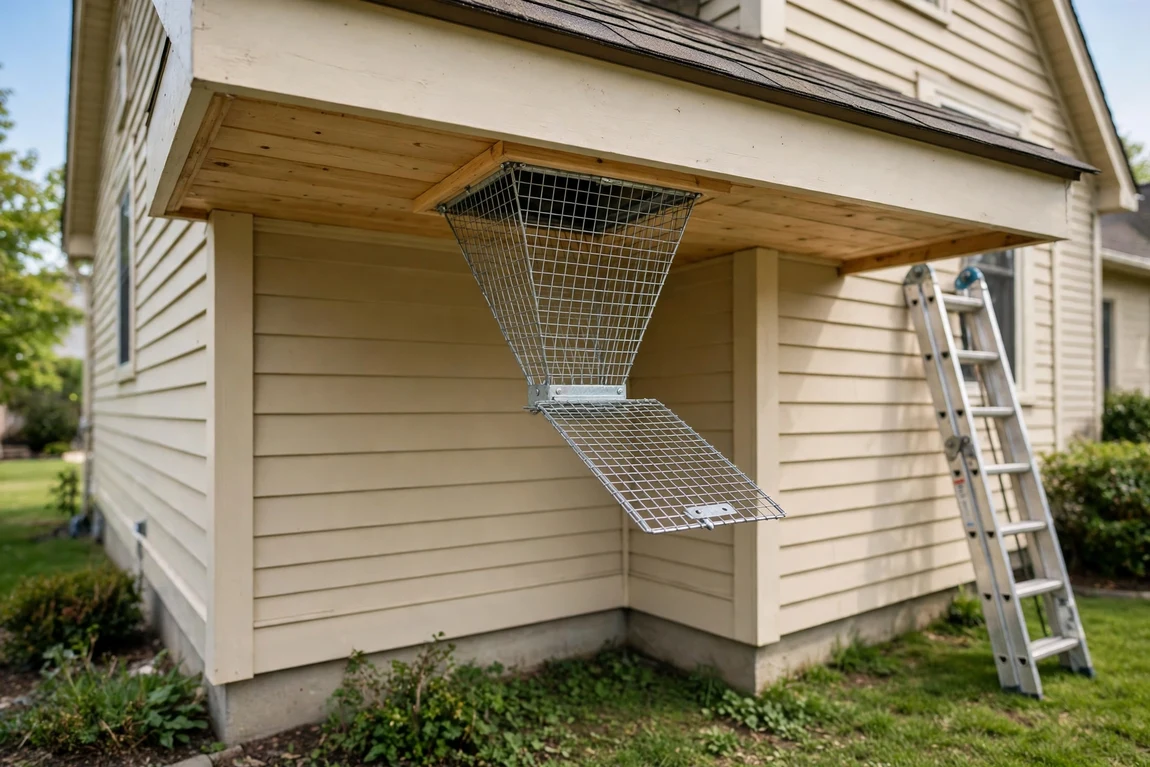
Step 4: Use a one-way door where it fits. A one-way exclusion door fitted over the main entry lets a raccoon leave but not re-enter. It only works if all other openings are already sealed with heavy material and if no immobile young are inside. If babies are present, a professional should remove them and place them in a box just outside the entry at dusk so the mother can retrieve and relocate them herself, a method WildlifeHelp.org describes.
Step 5: Confirm the space is empty. Wait several nights with no noise, tracks, or new damage before final repairs. The UC IPM Pest Notes on raccoons stress exclusion as the key to eliminating den sites, but exclusion done too early simply locks the problem inside.
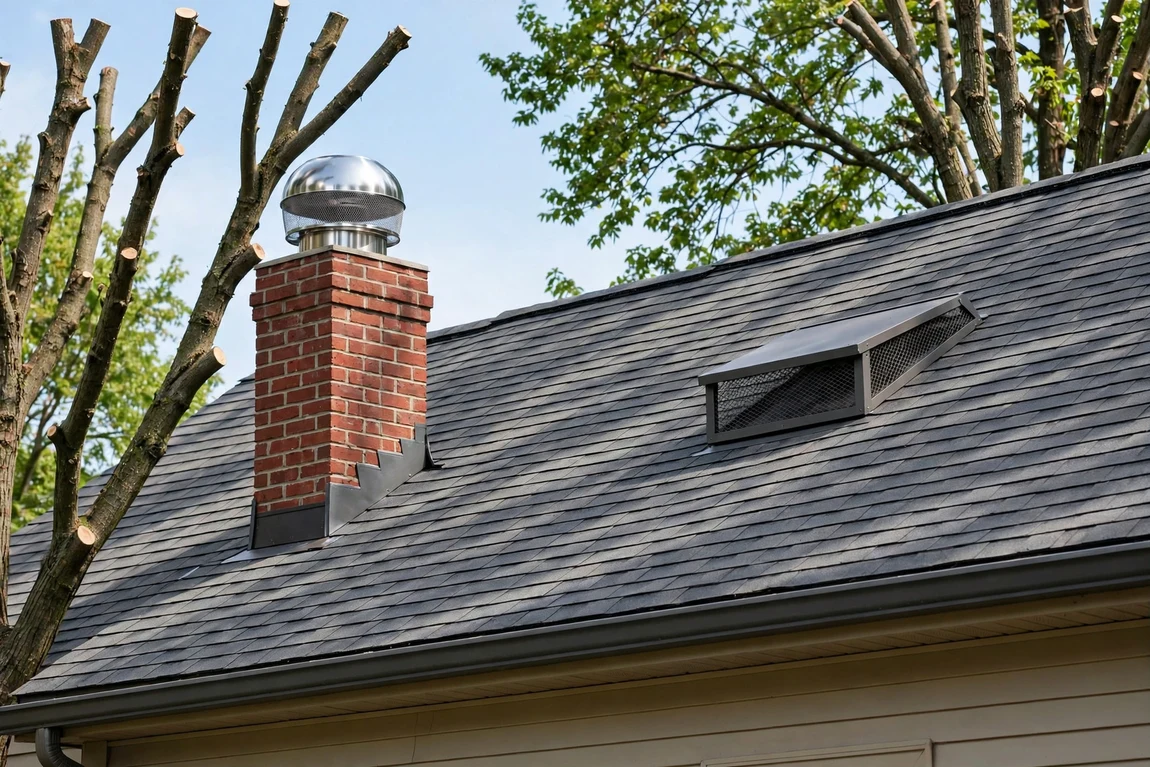
Step 6: Seal with heavy material, not foam alone. Cover openings with wire mesh, sheet metal, or metal flashing, as WildlifeHelp.org advises. Cap the chimney with a securely fastened spark arrester that meets your local fire code, after confirming no animals are inside. Screen open spaces under porches, decks, and sheds with galvanized hardware mesh, with the bottom edge buried at least 6 inches deep and extended outward for 12 inches, following UC IPM.
Step 7: Clean up with roundworm precautions. Raccoon feces can carry raccoon roundworm eggs, which can cause blindness, brain damage, and death, WildlifeHelp.org warns, ideally handled by a professional cleanup service. If you clean a small area yourself, follow the CDC care it cites: disposable gloves, an N95 respirator in a confined space, light misting to avoid dust, and thorough washing afterward. Never dry-sweep a latrine.
Trapping and Relocation: Know the Law First
Trapping is not a first step and it is not legal everywhere in the same way. UC IPM notes that in California raccoons are classified as furbearers, relocation is prohibited without written permission of the Department of Fish and Wildlife, and releasing animals elsewhere can spread disease and simply move the problem to someone else.
Rules differ by state, county, and city, so check your state wildlife agency before any trap is set. Where trapping is legal, a sturdy live cage trap at least 10 by 12 by 32 inches is the type UC IPM describes, but it also advises homeowners unfamiliar with trapping to hire a professional wildlife control operator instead.
Prevention That Keeps Raccoons Away
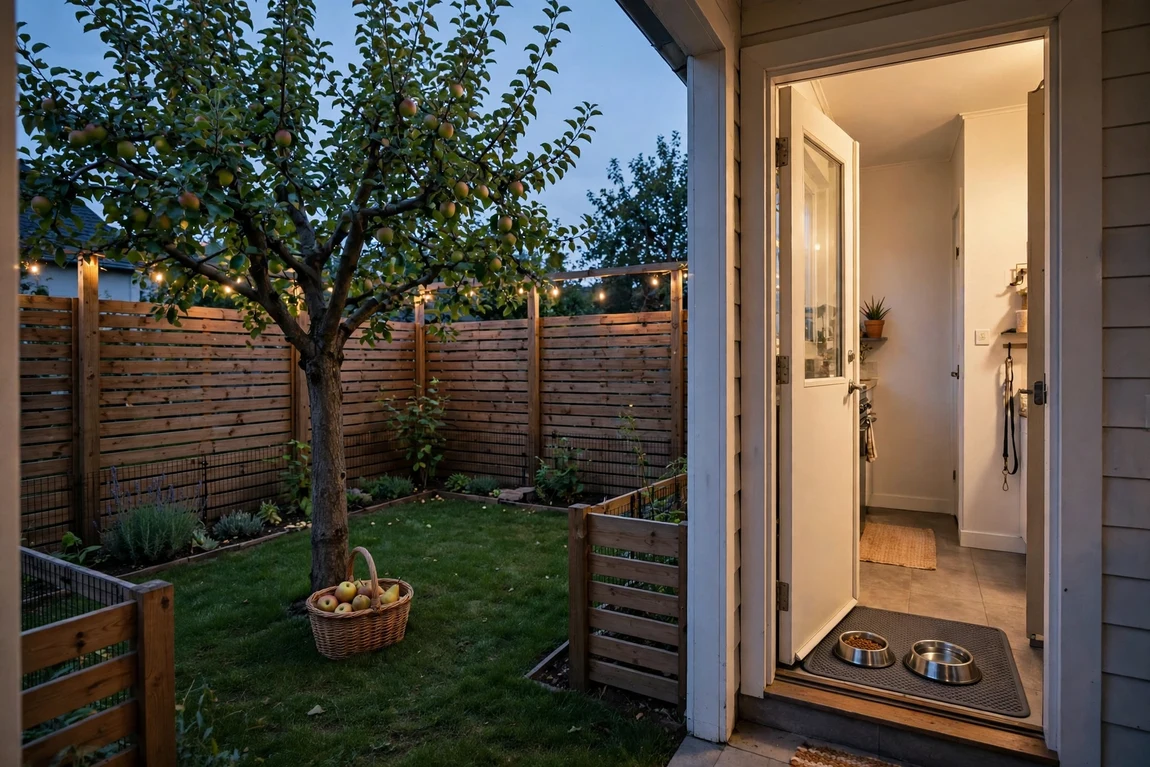
Prevention is the lasting half of how to get rid of raccoons, because a sealed attic next to an open buffet will attract the next animal. Keep trash secured, compost covered, grills cleaned, and bird feeders managed. Bring pet food and water bowls in at night without exception.
Cut roof access. Trim branches that overhang the roof, leaving a gap of at least 5 feet between roof and tree if possible, as UC IPM recommends. Remove or secure trellises and arbors that act as ladders, thin overgrown shrubbery, and remove woodpiles or other materials a raccoon could den in or under.
DIY vs. Professional Help
DIY work is reasonable for the outside jobs: securing trash, removing pet food, picking up fallen fruit, trimming branches, and screening an empty, confirmed-vacant opening. Those steps are the everyday core of how to get rid of raccoons and they cost little beyond time and hardware cloth.
Call a licensed professional or animal control for a raccoon in living space, a mother with young, a chimney den, any animal that is sick, aggressive, or active in daylight, and any cleanup involving a latrine. Professionals may also have pre-exposure rabies vaccination, as WildlifeHelp.org notes, which is a clear sign of the risk involved in handling these animals.
Safety and Rabies Notes
Raccoons are carriers of rabies and distemper, and raccoon roundworm from feces can cause serious disabilities, with young children thought to be most susceptible, according to UC IPM. Keep pets vaccinated, keep children away from dens and latrines, and never feed or approach a raccoon for a photo.
Never handle a raccoon, alive or dead, with bare hands. If a person or pet is bitten or scratched, wash the wound, and contact a medical provider, veterinarian, and local health department or animal control promptly for rabies guidance. Do not try to test or capture the animal yourself.
Frequently Asked Questions
Can I just seal the hole while the raccoon is out at night?
Only if you are certain no other raccoon and no young remain inside. In spring and summer that certainty is hard to earn. A one-way door plus several quiet nights is safer than a sudden seal.
Do mothballs, lights, or radios work on their own?
Brief frightening with lights and noise can encourage an animal to leave, but UC IPM notes that frightening devices are often effective only for a few days before raccoons learn there is no real threat. Use them as support for exclusion, not as the whole plan.
Is it legal to trap and release a raccoon in the woods?
Often not without permission, and rules vary by state. In California, for example, UC IPM states relocation is prohibited without written department permission. Check your state wildlife agency first.
What size gap can a raccoon fit through?
WildlifeHelp.org states raccoons need only a 4-inch gap to enter a space. That is why vents, soffit joints, and loose fascia all need heavy mesh or metal, not just caulk or foam.
How do I clean up after raccoons in the attic?
Prefer a professional service for latrine cleanup because of roundworm risk. For any small cleanup, wear disposable gloves and an N95 respirator in confined spaces, mist lightly to control dust, bag contaminated material, and wash thoroughly, following the CDC care cited by WildlifeHelp.org.
What is the most permanent solution?
Get every animal out humanely, confirm the space is empty, seal every entry with heavy material, and remove food for good. That full sequence is what makes how to get rid of raccoons last instead of repeating every spring.